
Teeth Whitening Aftercare: What You Can (and Cannot) Eat for 48 Hours
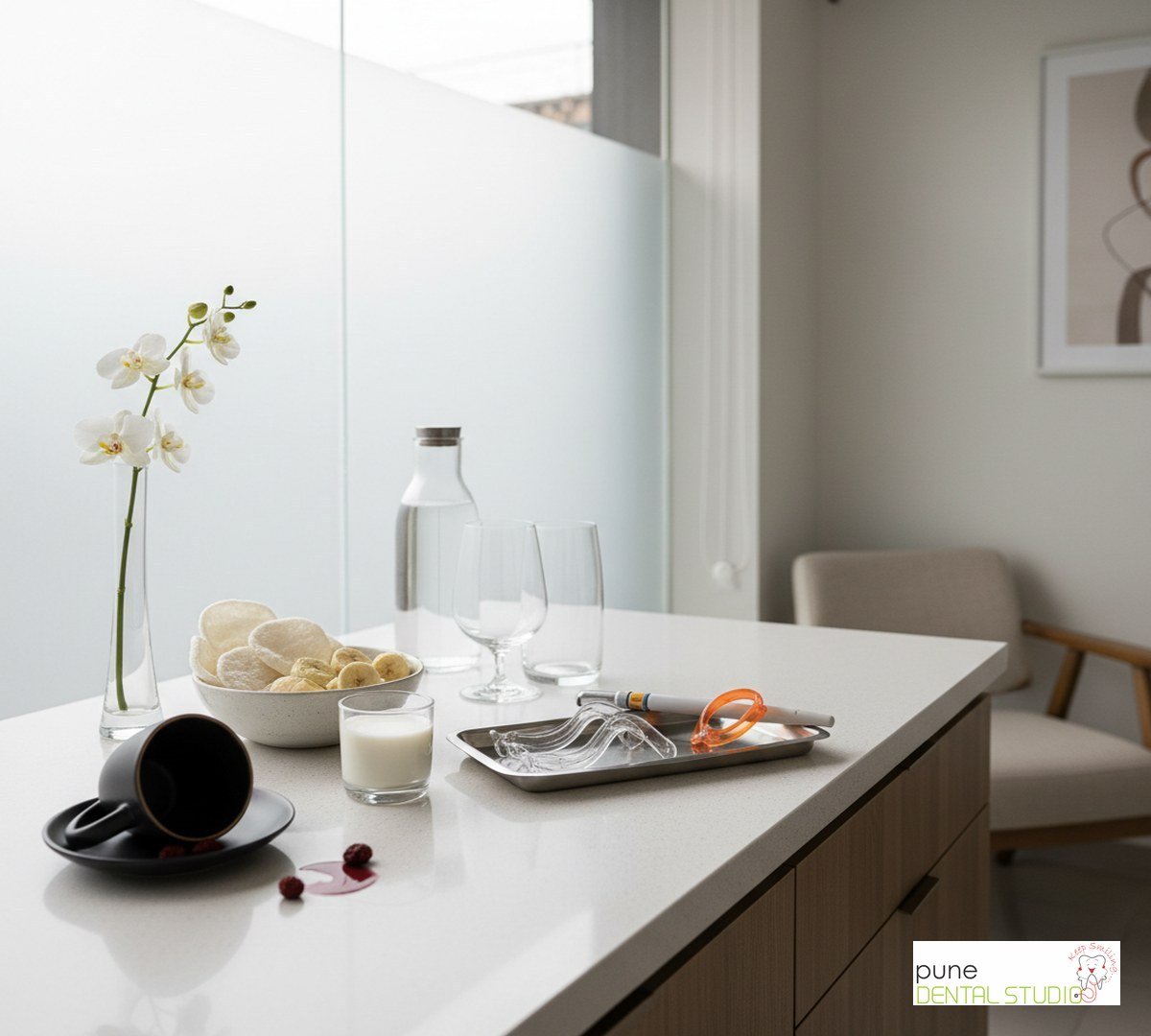
You’ve Just Had Your Teeth Whitened. Now What?
You walk out of the clinic with a brighter smile, feeling fantastic. But then reality hits: someone offers you a coffee, and you freeze. Can I drink this? What about that pasta sauce I was planning for dinner? Will one sip of red wine undo everything?
I hear this question almost every single day from patients, and honestly, it’s one of the most important things to get right in the first 48 hours after whitening. The good news is that the rules aren’t complicated. The better news is that they’re temporary. Let me walk you through exactly what happens to your teeth during whitening, and why those 48 hours matter so much.
Why 48 Hours? Understanding What Whitening Does to Your Teeth
When we whiten your teeth professionally, we’re using a peroxide-based gel that penetrates the enamel and breaks down stain molecules deep inside the tooth. This process opens up tiny pores in your enamel temporarily, making your teeth more porous and more receptive to absorbing colour from whatever you eat or drink.
Think of it like this: your freshly whitened teeth are like a clean sponge. For the next 48 hours, that sponge is extra absorbent. Anything dark or staining that touches it will soak in more easily than it would on a tooth that hasn’t been whitened.
After about 48 hours, your enamel begins to re-mineralise and those pores start to close back up. Your teeth become less susceptible to staining again. But during those first two days, caution is your best friend.
The Clear Winners: What You CAN Eat and Drink
Let me start with the good news. There’s actually quite a lot you can enjoy.
Safe Foods
Stick to foods that are white, clear, or very pale in colour. This includes:
- White rice, pasta, or bread
- Chicken breast or white fish
- Eggs (boiled, scrambled, or fried in clear oil)
- White cheese like mozzarella or feta
- Bananas, white grapes, or peeled apples
- Cauliflower, white beans, or potatoes
- Milk, yoghurt, or plain ice cream
- Tofu
- Clear broths or white soups (avoid tomato-based or dark soy-based ones)
Basically, if it’s pale or colourless, it’s probably safe.
Safe Drinks
- Water (your best friend for the next 48 hours)
- Milk
- Clear coconut water
- White tea (not black or green tea)
- Clear apple juice
- Lemonade made with white sugar
I usually tell patients to treat water as their primary beverage for these two days. It’s not just safe, it’s actually beneficial because it keeps your mouth hydrated and helps your teeth re-mineralise.
The Definite No-Nos: What to Avoid Completely
Now for the foods and drinks that can seriously compromise your whitening results. I’m not exaggerating when I say these are the main culprits that undo people’s work.
Drinks to Avoid
- Coffee (hot or iced)
- Tea (black, green, or herbal)
- Red wine or any dark wine
- Cola, cola-type soft drinks, or dark sodas
- Red juice or cranberry juice
- Dark beer
- Balsamic vinegar or any dark vinegar-based drinks
- Soy sauce or tamari in water
- Sports drinks or energy drinks (they’re often dark or highly pigmented)
I know. Coffee is rough for a lot of people. But here’s what I tell my patients: you’ve invested in whitening your teeth. Two days without coffee is a small price to pay for results that can last six months to a year.
Foods to Avoid
- Tomato-based sauces or curries
- Soy sauce or dark Asian condiments
- Beetroot or beetroot juice
- Dark chocolate or chocolate-based desserts
- Blueberries, blackberries, or dark grapes
- Spinach or dark leafy greens (yes, really)
- Turmeric or any deeply coloured spices
- Balsamic vinegar on salads
- Red or dark sauces of any kind
- Liquorice or dark sweets
- Charcoal-based foods or drinks (activated charcoal products)
The pattern here is simple: if it’s dark, staining, or deeply pigmented, avoid it.
The Grey Zone: Foods You Can Probably Manage
There are a few things that fall into a middle ground. These aren’t ideal, but if you’re careful, you might get away with them.
Acidic Foods
Lemon, lime, vinegar, and other acidic foods can soften your enamel temporarily, making it even more susceptible to staining. If you do eat something acidic, rinse your mouth with water afterwards and wait 30 minutes before brushing (brushing immediately can damage softened enamel).
Hot Foods
Heat opens the pores of your teeth even more. Avoid very hot meals, soups, or drinks. Stick to room temperature or cool foods where possible.
Sticky or Textured Foods
Things like peanut butter, honey, or sticky sauces can cling to your teeth and be harder to clean off. If you do eat these, brush gently afterwards.
The Practical Reality: How Strict Do You Need to Be?
Here’s my honest take after 20+ years of seeing whitening results: the stricter you are in those first 48 hours, the better your results will be. But I also know that life happens.
If you slip up and have a cup of coffee on day one, the world won’t end. Your whitening won’t be completely undone. But every dark drink or staining food you consume does chip away at your results a little bit. Think of it as a bank account. You’re making deposits in your whitening results when you avoid staining foods, and withdrawals when you don’t.
The patients I see who get the absolute best, longest-lasting results are the ones who treat these 48 hours like a mini-challenge. They plan their meals ahead, they bring a water bottle everywhere, and they know exactly what they’re going to eat before they get hungry.
Practical Tips to Make It Easier
Plan Your Meals
Before your whitening appointment, sit down and plan what you’ll eat for the next two days. Make a shopping list of safe foods. This removes the "what can I eat?" stress when you’re hungry.
Use a Straw
If you absolutely must have a dark drink (and let’s be honest, some people will), use a straw to minimise contact with your teeth. Even better, drink it quickly and rinse your mouth with water immediately afterwards.
Keep a Water Bottle With You
Carry water everywhere. Sip it throughout the day. It keeps your mouth hydrated, helps your teeth re-mineralise, and gives you something to drink when you’re thirsty instead of reaching for coffee or tea.
Don’t Brush Immediately After Eating
Wait at least 30 minutes after eating before you brush your teeth. Your enamel is temporarily softened, and brushing right away can cause micro-damage. When you do brush, use a soft-bristled toothbrush and be gentle.
Avoid Whitening Strips or Trays at Home
If you’ve had professional whitening, don’t use over-the-counter whitening products for at least a week. Your teeth are already sensitive and the enamel is still re-mineralising.
What About Tooth Sensitivity?
Many patients experience some sensitivity after whitening, especially to cold. This is normal and usually temporary. If you do feel sensitivity during these 48 hours:
- Avoid very cold foods and drinks
- Use a sensitivity toothpaste (apply it to your teeth with your finger, don’t brush it on)
- Rinse your mouth with lukewarm water
- Avoid acidic foods that can increase sensitivity
If sensitivity persists beyond a few days, get in touch. We can recommend specific products or treatments to help.
After 48 Hours: You’re Not Completely Off the Hook
Once you’ve made it through the first 48 hours, the rules do relax. Your enamel has re-mineralised and your teeth are much less porous. But here’s the thing: your teeth are still freshly whitened and more prone to staining than they were before the treatment.
For the next week or two, I still recommend being a bit cautious with dark drinks and heavily staining foods. You don’t need to be as strict, but every bit of care you take extends your whitening results.
After about a week, you can go back to your normal diet. Your whitening results will have stabilised, and while your teeth may gradually pick up some colour again over the coming months, the major risk period has passed.
The Long Game: Maintaining Your Whitening Results
Your whitening results typically last anywhere from 6 months to a year, depending on your diet and lifestyle. To extend them:
- Limit dark drinks like coffee, tea, and red wine
- Rinse your mouth with water after eating or drinking anything staining
- Brush your teeth twice a day with a whitening toothpaste
- Avoid smoking (it stains teeth significantly)
- Have regular professional cleanings
Many of my patients come back for a touch-up whitening every 6 to 12 months, especially if they’re regular coffee drinkers. It’s a quick, affordable way to keep that bright smile looking fresh.
FAQ: Your Whitening Aftercare Questions Answered
Can I drink water with lemon in it?
Lemon is acidic and can soften your enamel. I’d skip it for the first 48 hours. Plain water is your best option.
What if I accidentally have a dark drink? Is my whitening ruined?
No, it’s not ruined. One slip-up won’t undo everything. Just rinse your mouth with water immediately and get back to the safe foods. The more you avoid staining foods, the better your results, but one mistake isn’t a disaster.
Can I chew gum?
White gum or clear gum is fine. Avoid anything dark or strongly coloured. Sugar-free gum is better for your teeth anyway.
What about mouthwash?
Many mouthwashes are dark and staining. Stick to clear or white mouthwash for the first 48 hours. If you don’t have any, just rinse with water.
Can I eat white chocolate?
Yes, white chocolate is fine. Dark chocolate is off the menu though.
What about white wine?
White wine is technically okay from a staining perspective, but it’s acidic, which can soften your enamel. I’d still recommend skipping it or being very cautious for the first 48 hours.
Do I need to avoid these foods if I use at-home whitening trays?
Yes, the same rules apply. Your teeth are just as porous and vulnerable after at-home whitening as they are after professional whitening.
A Final Word
I know 48 hours of dietary restrictions might feel annoying, but I promise you it’s worth it. The patients who follow these guidelines get noticeably better, longer-lasting results. And honestly, most people find it’s not as difficult as they think. You’re only avoiding certain foods for two days, not forever.
Think of it as an investment in your smile. You’ve already taken the step to whiten your teeth, which means you care about how they look. These 48 hours are just the final piece of the puzzle.
If you have any questions about your whitening aftercare, or if you’re thinking about professional teeth whitening and want to know more, I’m always here to help. You can reach us at +91 98811 92594 or WhatsApp us anytime. We’re located in Baner, and we’d love to help you achieve the bright smile you’re looking for.
Your smile is worth the care. Let’s keep it looking its absolute best.
Warm regards,
Dr. Sunayana Khade Pune Dental Studio, Baner
Dentistry that feels like a deep breath.
See it for yourself – your first visit is a conversation, not a commitment.
Book a Visit