
Invisible Aligners vs. Braces: Can Your Kid Really Chew Gum Freely?
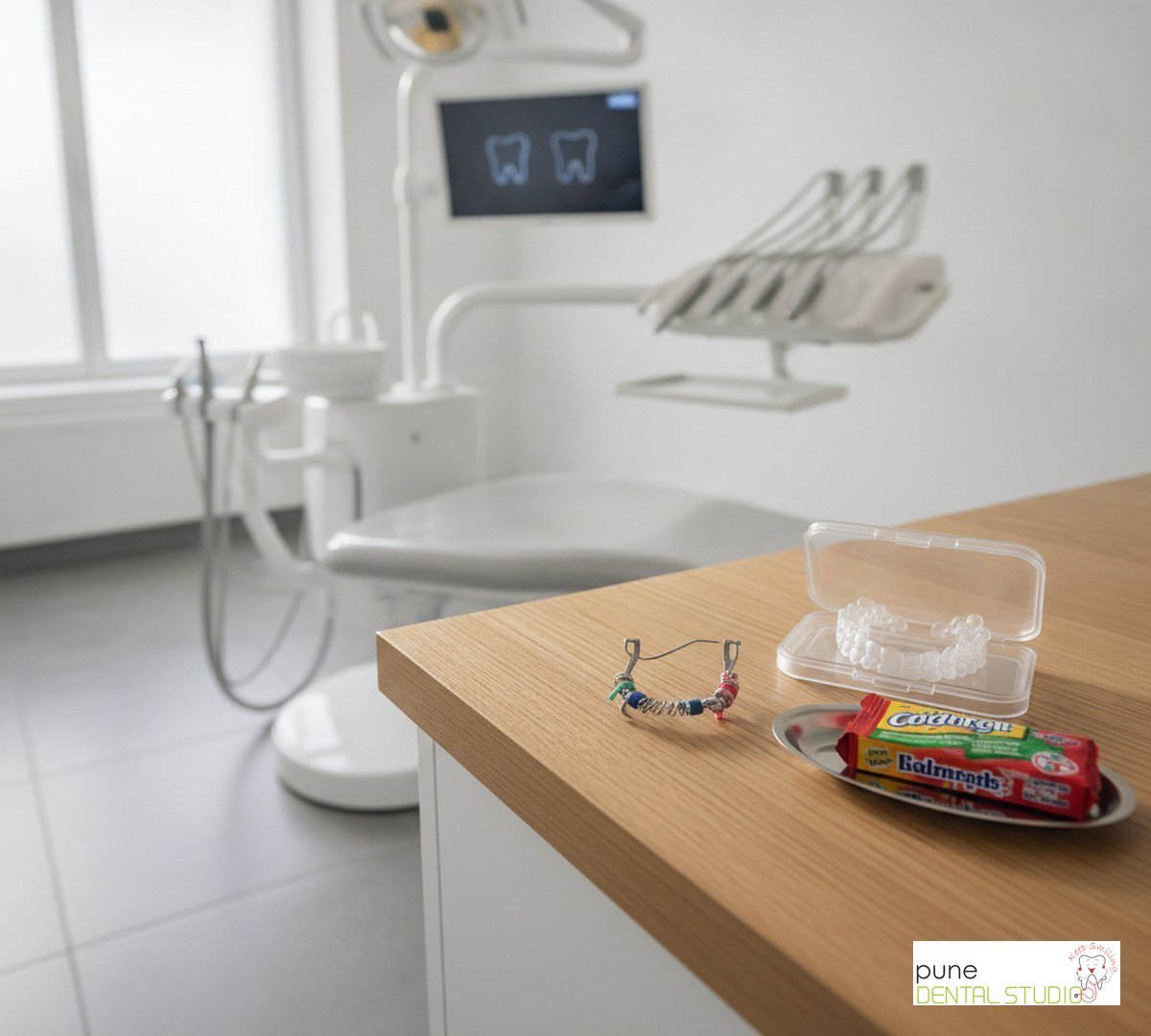
The Question Every Parent Asks
Your child needs straighter teeth. You’ve heard about invisible aligners. They sound perfect, right? No metal, no brackets, no visibility. But then you think: "Wait, can they actually eat and chew normally? What about gum? Won’t they just lose the aligners?"
I hear this exact worry almost every week in my clinic here in Baner. Parents imagine their teenager sneaking gum in school, the aligner popping out, getting lost. Or they picture their child struggling to eat lunch because of wires and brackets. The truth, as with most things in dentistry, is more nuanced than the marketing suggests.
Let me walk you through what I actually see in my practice, what the science tells us, and what will genuinely work best for your family.
The Gum Question: The Real Story
Let’s start with what you actually want to know.
With traditional metal or ceramic braces, gum is essentially off-limits. Not because it’s impossible to chew it, but because sticky gum wraps around brackets and wires, gets stuck, and can pull the brackets clean off your teeth. I’ve had to fix this damage more times than I’d like to admit. It’s frustrating for the patient, expensive to repair, and sets back treatment by weeks.
With invisible aligners, the situation is completely different because you remove them before eating or drinking anything except water. So yes, your child can chew gum freely, but only when the aligners are out. The catch? They need to put the aligners back in immediately afterward, and they need to do this consistently.
Here’s what I’ve learned from watching hundreds of kids wear aligners: the ones who succeed are the ones whose parents set clear expectations upfront. "You can have gum, but aligners come out first, and they go back in right after." Kids who are motivated and old enough to follow that routine do brilliantly. Younger kids, or kids who are forgetful, sometimes struggle because removing and reinserting aligners throughout the day feels like a chore.
Speed: Which Option Actually Moves Teeth Faster?
One of the biggest selling points of invisible aligners is that they work faster. The claim is partly true, but it depends on what needs fixing.
For mild to moderate spacing issues (the kind that affects about 60% of kids I see), invisible aligners can finish the job in 6 to 18 months. Traditional braces typically take 12 to 24 months for the same complexity. So yes, aligners can be up to 30% faster.
But here’s the reality I explain to every parent: if your child has a severe bite problem, a deep overbite, or teeth that are severely rotated or crowded, braces are still the gold standard. Aligners have limits. They work beautifully for straightening, but they’re less effective at correcting complex bite relationships. Braces, with their continuous pressure and ability to move teeth in three dimensions simultaneously, handle the tough cases better.
I’ve had kids come to me after starting with aligners elsewhere, only to discover their bite wasn’t actually improving. We switched to braces, and suddenly real progress happened.
Comfort and Daily Life: What Kids Actually Experience
Let me be honest about both options, because comfort matters when you’re asking someone to wear orthodontic treatment for over a year.
Invisible Aligners
They’re smoother. There are no sharp brackets or poking wires. Most kids find them more comfortable to wear, especially in the first few days of a new set. The pressure is gentler and more distributed.
But they do require discipline. Your child needs to wear them 20 to 22 hours a day. That means they come out for eating, drinking anything but water, brushing, and flossing. For a busy teenager juggling school, sports, and social life, this can feel tedious. I’ve seen kids forget to put them back in after lunch and lose hours of wear time. Over weeks, that adds up and delays treatment.
Also, they need cleaning. Aligners can trap bacteria and develop a slight odor if not rinsed and brushed regularly. Some kids find this annoying.
Traditional Braces
They’re fixed. Your child doesn’t have to remember anything. They’re on the teeth 24/7, doing their job. There’s no risk of losing them or forgetting to wear them.
But they do come with discomfort. The first week after getting braces, and the first few days after each adjustment, many kids experience soreness. They can’t eat hard, sticky, or crunchy foods. Popcorn, nuts, chewing gum, caramel, apples (unless cut into small pieces) are all off the menu. Cleaning around brackets is harder and takes longer.
For a kid with a very active social life, or one who plays contact sports, braces can feel restrictive.
Cost: What You’ll Actually Pay
At Pune Dental Studio, we’re transparent about pricing from day one. No surprises.
Traditional braces (metal or ceramic) start from Rs 50,000. This covers the full treatment course.
Invisible aligners start from Rs 80,000. The higher cost reflects the digital technology required to design and manufacture custom aligners.
Both options require regular appointments for adjustments or new aligner sets. Both may require additional treatment if your child doesn’t follow care instructions (like wearing aligners the required hours, or breaking a bracket).
If cost is the primary concern, braces are the more affordable option. But if your child is motivated and disciplined, aligners are worth the extra investment for the comfort and aesthetic benefits.
Complexity Matters More Than You Think
Here’s what I always tell parents: the best treatment is the one that actually fixes your child’s specific problem.
I use our 3D digital scanning technology to map your child’s bite in detail before recommending anything. This isn’t guesswork. I can show you exactly what needs to move and by how much. Then I can honestly tell you whether aligners will do the job, or whether braces are the smarter choice.
For mild to moderate crowding or spacing? Aligners excel. For severe crowding, deep bites, or complex bite correction? Braces are more predictable.
Eating and Nutrition During Treatment
With aligners, your child can eat absolutely anything. Aligners come out, they eat normally, they clean their teeth, they put aligners back in. No food restrictions. This is genuinely convenient for growing kids who need proper nutrition.
With braces, certain foods are off-limits to prevent damage. Hard candies, popcorn, sticky foods, whole apples, corn on the cob, nuts, and chewing gum all pose a risk. Your child learns to adapt, but it does require awareness and sometimes feels limiting, especially at social events.
Cleaning and Oral Hygiene
This is where aligners have a real advantage. Your child removes them to brush and floss normally. No special tools, no threading floss under wires. Just regular brushing and flossing.
With braces, cleaning is more involved. Food gets trapped under wires and around brackets. Kids need to use special floss threaders or water flossers. If they don’t clean thoroughly, plaque builds up, and I’ve seen cavities develop during orthodontic treatment. This is preventable with good habits, but it requires more effort.
Visibility and Social Confidence
Let’s be real: many kids care deeply about how they look. Invisible aligners are, well, invisible. They don’t draw attention. For a teenager conscious about appearance, this matters psychologically.
Braces are visible. Some kids wear them with confidence and style. Others feel self-conscious. I’ve had kids tell me they felt more anxious during their braces phase. I’ve also had kids say the visibility motivated them because everyone could see they were taking action to improve their smile.
You know your child best. If they’re sensitive about appearance, aligners might boost their confidence during treatment.
The Responsibility Factor
Here’s something I always emphasize to parents: treatment success depends on your child’s maturity level and responsibility.
Aligners require discipline. Your child must remember to wear them 20+ hours daily. They must remove them before eating. They must clean them. They must keep track of them so they don’t get lost. If your child is forgetful, impulsive, or doesn’t yet have strong self-care habits, aligners will be frustrating for everyone.
Braces require care, but not memory. Once they’re on, they stay on. Your child just needs to brush and floss carefully, avoid certain foods, and show up for appointments. The responsibility is more about maintenance than daily discipline.
I’ve seen 14-year-olds handle aligners beautifully and 18-year-olds lose them repeatedly. Age isn’t the only factor. Maturity and motivation are.
What About Sports and Activities?
If your child plays contact sports (rugby, boxing, martial arts), this is worth discussing.
With braces, a direct hit to the mouth can damage brackets or bend wires. A mouthguard helps, but it’s awkward to wear over braces. Some kids manage fine; others find it uncomfortable.
With aligners, you simply remove them before playing and wear a regular mouthguard. No conflict. This is actually one of the clearest advantages aligners have for athletic kids.
My Honest Recommendation
After 20 years of practice, here’s what I’ve learned: there’s no universally "best" option. There’s only the best option for your specific child.
Choose invisible aligners if your child has mild to moderate spacing or crowding, is mature enough to wear them 20+ hours daily, plays contact sports, or values aesthetic confidence during treatment.
Choose traditional braces if your child has a complex bite problem that needs correction, is younger or less disciplined about daily responsibility, or if cost is a significant factor.
My job is to assess your child’s teeth, explain the options clearly, and let you make an informed decision together. There’s no pressure, no upselling. Just honesty.
Aftercare and Retention
One thing parents often overlook: treatment doesn’t end when the braces come off or the aligners finish. Both require retention to prevent teeth from shifting back.
With both options, your child will likely need a retainer for years, possibly indefinitely. This is non-negotiable if you want the investment to last.
I always explain this upfront because I’ve seen families invest time and money in orthodontics, only to neglect retention and watch teeth gradually shift back. Don’t let that be you.
Frequently Asked Questions
Can my child chew gum with aligners? Yes, but only when the aligners are removed. They need to clean their teeth afterward and immediately reinsertion the aligners.
Will aligners work for my child’s severe crowding? Maybe, maybe not. I need to see a 3D scan to answer this honestly. Severe cases often need braces.
How much faster are aligners really? Up to 30% faster for mild to moderate cases. For complex bites, the difference is minimal.
What if my child loses an aligner? We can usually reorder a replacement, but there’s a cost and a delay in treatment. This happens occasionally with kids who aren’t careful.
Can my child play sports with braces? Yes, with a mouthguard. Aligners are easier for contact sports because they’re removed beforehand.
Do aligners hurt? Less than braces, generally. There’s gentle pressure but fewer sharp edges.
What if we start with aligners and they don’t work? We can switch to braces. It’s not ideal because it delays overall treatment, but it’s possible if needed.
Let’s Talk About Your Child’s Smile
Every child’s teeth are different. Every family’s situation is different. What works brilliantly for one kid might not suit another.
I’d love to sit down with you and your child, show you a 3D digital scan of their teeth, and walk through exactly what we’re working with. No pressure. Just clarity.
You can reach us at +91 98811 92594 or visit our clinic at The Mint, off Baner Road, Baner. We’re here to answer your questions and help you make the choice that feels right for your family.
Your child’s smile is worth getting right. Let’s do this together.
Dentistry that feels like a deep breath.
See it for yourself – your first visit is a conversation, not a commitment.
Book a Visit